
The most important Ralph quotes from Lord of the Flies reveal how a boy who believes in rules, fairness, and rescue struggles to preserve civilization on a deserted island. Through Ralph’s words, William Golding explores leadership, responsibility, fear, guilt, and the darker side of human nature.
At first, Ralph believes the boys can work together and return home if they follow rules and keep a signal fire burning. As their society falls apart, he begins to understand that being a good leader does not mean everyone will listen. These key quotations, with chapter references and explanations, help readers understand Ralph’s changing character and the novel’s central themes.
Ralph Quotes on Leadership and Rules

Ralph becomes chief because the other boys see him as a natural leader. He tries to organize their lives through meetings, shared responsibilities, and clear rules. His leadership is based on cooperation rather than fear, but maintaining that order becomes increasingly difficult.
1. “Jack’s in charge of the choir. They can be what do you want them to be?” Chapter 1
Meaning and analysis: Ralph gives Jack responsibility for the choirboys after becoming chief. His decision shows that Ralph is willing to share authority rather than control every part of the group himself. However, it also gives Jack a ready-made group of followers who later become his hunters.
The moment foreshadows the rivalry between the two boys. Ralph wants responsibilities to serve the whole group, while Jack gradually uses his influence to build a separate source of power.
Theme: Leadership and power.
2. “We ought to have more rules. Where the conch is, that’s a meeting. The same up here as down there.” Chapter 2
Meaning and analysis: Ralph wants the boys to respect the conch and follow the same meeting rules wherever they gather. He understands that a community needs shared expectations if people are to live and work together.
The conch represents more than an object. It gives the boys a practical way to organize discussion and recognize each other’s right to speak. Ralph’s confidence in this system becomes increasingly fragile as the boys lose interest in cooperation.
Theme: Order and democracy.
3. “Things are breaking up. I don’t understand why. We began well; we were happy.” Chapter 5
Meaning and analysis: Ralph recognizes that the group is losing its sense of purpose. The boys are neglecting their responsibilities, arguing about the beast, and paying less attention to the meetings.
His confusion makes the quotation especially revealing. Ralph knows the group once worked toward common goals, but he cannot fully explain why that cooperation is disappearing. Golding presents leadership as a difficult responsibility: good intentions alone cannot keep a community together.
Theme: Leadership and social breakdown.
Ralph Quotes About the Conch and Civilization

The conch is one of the novel’s central symbols. It represents the boys’ attempt to establish order, give everyone a voice, and settle disagreements through discussion. Ralph trusts this system because it offers an alternative to force.
4. “We can’t have everybody talking at once. We’ll have to have ‘Hands up’ like at school. Then I’ll give him the conch. I’ll give the conch to the next person to speak. He can hold it when he’s speaking.” Chapter 2
Meaning and analysis: Ralph introduces a speaking system based on the familiar rules of school. His proposal shows that he is trying to recreate a society in which people take turns and listen to one another.
The conch gives practical form to his idea of fairness. Yet the scene also reveals a limitation in Ralph’s leadership: a rule can guide behavior, but it cannot force people to respect the rule when they no longer want to.
Theme: Democracy and shared responsibility.
Why the conch matters to Ralph
Ralph’s attachment to the conch reflects his belief that disagreements should be resolved through discussion instead of violence. As Jack’s influence grows, the boys increasingly ignore the conch’s authority.
Its destruction in Chapter 11 marks a major turning point. The group has lost not only a symbol of order but also much of its willingness to recognize a common set of rules.
Ralph Quotes About the Signal Fire and Rescue
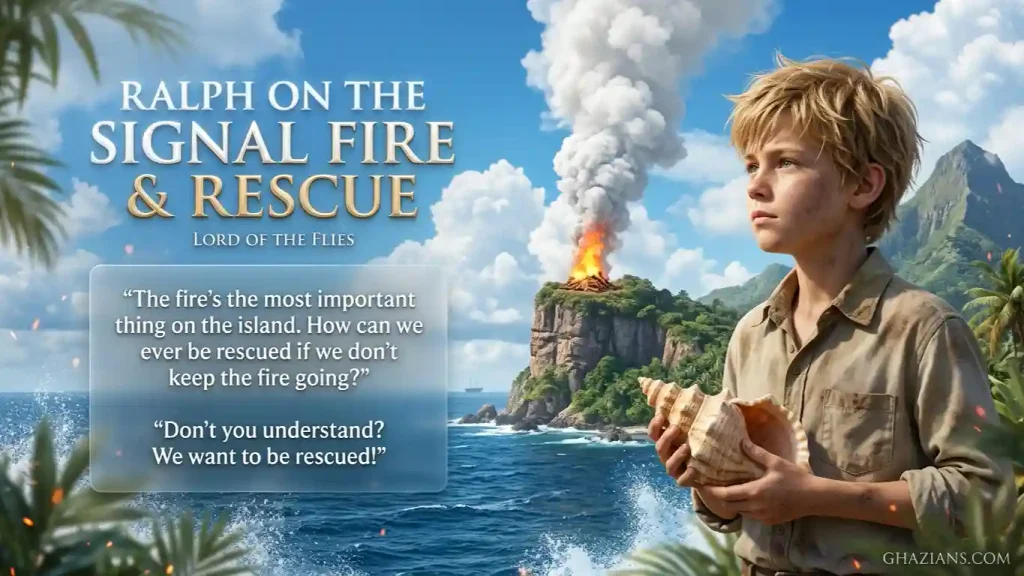
Ralph’s strongest practical goal is to get the boys rescued. He knows that the island is not their home and that a signal fire could alert a passing ship. His focus on rescue separates him from Jack, whose growing interest in hunting draws the boys away from their long-term survival.
5. “We’ve got to have special people to look after the fire. Any day there may be a ship out there… and if we have a signal going they’ll come and take us off.” Chapter 2
Meaning and analysis: Ralph understands that rescue requires planning and consistent effort. He wants the boys to assign responsibilities so the signal fire will not be forgotten.
The quotation shows his practical side. Ralph is not simply interested in being chief; he wants the group to do the work that could bring them home. The fire also becomes a symbol of hope, linking the boys to the world beyond the island.
Theme: Hope and responsibility.
6. “Don’t you want to be rescued? All you can talk about is pig, pig, pig!” Chapter 4
Meaning and analysis: Ralph becomes angry when Jack’s hunters allow the signal fire to go out while pursuing a pig. A ship passes without seeing the smoke, and the boys lose a possible chance of rescue.
The conflict reveals the difference between Ralph’s priorities and Jack’s. Ralph thinks about the future and the group’s shared needs, while Jack is increasingly absorbed by the excitement of hunting. The failure of the fire demonstrates how one person’s choices can affect everyone.
Theme: Responsibility versus immediate gratification.
7. “The fire’s the most important thing. Without the fire we can’t be rescued. I’d like to put on war-paint and be a savage. But we must keep the fire burning.” Chapter 8
Meaning and analysis: Ralph admits that he feels the attraction of Jack’s way of life, even though he knows that abandoning the fire would threaten their chances of going home.
This moment makes Ralph a more complex character. He is not completely separate from the impulses affecting the other boys. He feels temptation, frustration, and uncertainty, but he continues to recognize the importance of their shared goal.
Theme: Temptation and moral responsibility.
Ralph Quotes About Fear, Guilt, and Innocence

As the novel becomes darker, Ralph loses some of his early confidence. The deaths and violence on the island force him to face the possibility that the greatest danger comes not from a mysterious creature but from the boys themselves.
8. “That was Simon… That was murder.” Chapter 10
Meaning and analysis: After Simon’s death, Ralph recognizes the seriousness of what happened during the boys’ frenzied gathering. Rather than treating the event as an accident or hiding behind excuses, he calls it murder.
This is an important moment of moral awareness. Ralph is not an innocent observer; he was involved in the group during the chaotic event. His words therefore express both recognition of the crime and an uncomfortable awareness of his own responsibility.
Theme: Guilt and moral responsibility.
9. “I’m frightened. Of us. I want to go home. Oh God, I want to go home.” Chapter 10
Meaning and analysis: Ralph’s fear changes the way he understands the island. Earlier, the boys worried about a beast that might be hiding in the forest. Now Ralph is frightened by what the boys themselves have done.
The short sentences convey his distress and his longing for the safety of home. The quotation also challenges the idea that civilization automatically makes people good. Ralph begins to recognize that violence can emerge even among children who have grown up within an orderly society.
Theme: Fear and the darkness of human nature.
Ralph Quotes About Law Versus Savagery
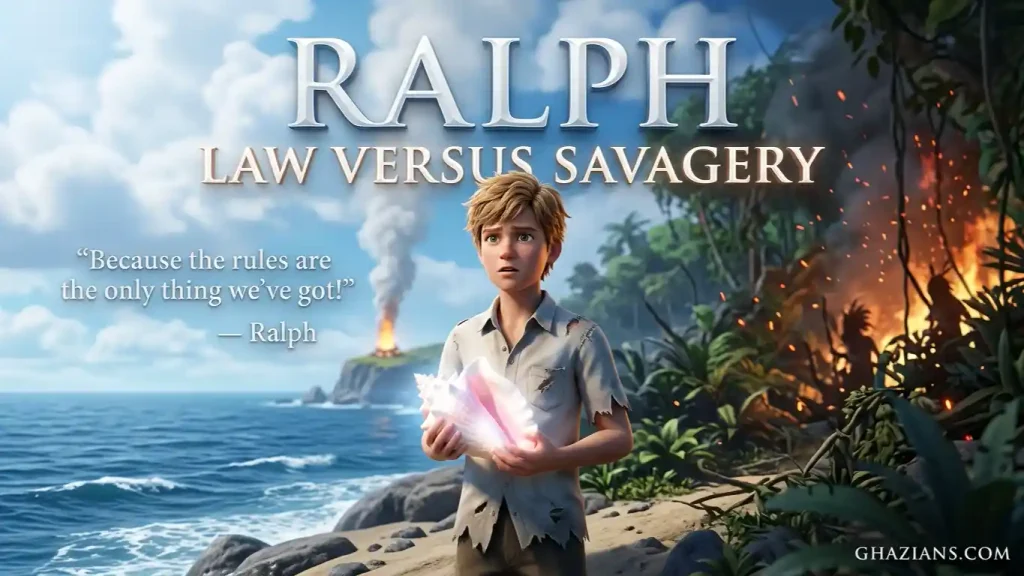
Ralph’s struggle with Jack reflects the novel’s wider conflict between cooperation and domination. Ralph believes rules and rescue are worth protecting, while Jack increasingly attracts followers through hunting, group identity, and force.
10. “Are we savages or what?” Chapter 11
Meaning and analysis: Ralph challenges the boys as their behavior becomes increasingly violent and their commitment to shared rules collapses. His question reflects his frustration with a group that once tried to organize itself but now treats authority as something to reject.
The line also connects to the novel’s central irony. The boys initially believe their upbringing makes them civilized, yet their actions increasingly contradict that belief. Golding asks readers to consider whether civilization depends on people’s willingness to practice restraint, empathy, and responsibility.
Theme: Civilization versus savagery.
Important Quote Attribution: Lines Often Misattributed to Ralph

Not every memorable line in Lord of the Flies belongs to Ralph. Correctly identifying the speaker is especially important when using quotations in school essays or literary analysis.
“We’ve got to have rules and obey them. After all, we’re not savages. We’re English, and the English are best at everything.” Jack, Chapter 2
This line is spoken by Jack, not Ralph. Jack initially supports rules and presents English identity as proof of civilization. The irony is that his later behavior increasingly contradicts this claim. The quotation is useful for comparing the two boys’ approaches to leadership and for examining Golding’s criticism of assumptions about civilized behavior.
“Which is better, law and rescue, or hunting and breaking things up?” Piggy, Chapter 11
This line is spoken by Piggy, not Ralph. During the confrontation at Castle Rock, Piggy appeals to reason and asks the boys to consider the difference between law and destructive behavior. His final appeal is followed by his death and the destruction of the conch, making the moment a major turning point in the novel.
“Ralph wept for the end of innocence…”
The novel’s closing sentence is narrated by William Golding, not a line spoken by Ralph. It describes Ralph’s grief and reflects on innocence, human darkness, and Piggy’s death. It is a powerful quotation for discussing Ralph’s character, but it should not be listed as Ralph’s dialogue.
What Ralph’s Quotes Reveal About His Character
Ralph’s words show a character who develops through conflict rather than one who always knows the right answer. His strengths and weaknesses make him more realistic than a simple heroic leader.
- He values cooperation. Ralph tries to make decisions through meetings and shared rules.
- He thinks about the future. The signal fire represents his determination to return home rather than surrender to the island’s immediate pleasures.
- He struggles to persuade others. His ideas may be sensible, but he cannot make the boys follow them consistently.
- He experiences guilt. His response to Simon’s death shows that he must face his own participation in the group’s violence.
- He learns to fear human behavior. By Chapter 10, his fear is no longer only about the beast; it is also about the boys themselves.
These qualities explain why Ralph matters to the novel. He represents an effort to preserve civilization, but Golding does not suggest that good intentions alone are enough to protect it.
How to Use Ralph Quotes in a School Essay
If you are writing an essay about Ralph, avoid dropping a quotation into a paragraph without explaining it. A strong paragraph connects the words to a clear argument about the character or a theme.
- Make a point. State what the quotation reveals about Ralph.
- Introduce the context. Explain what is happening when he speaks.
- Use a short quotation. Choose only the words that support your argument.
- Analyze the language. Discuss a meaningful word, contrast, image, or tone.
- Connect to the theme. Explain how the moment relates to leadership, civilization, fear, or responsibility.
Example analysis: Ralph’s insistence on maintaining the signal fire shows that he thinks beyond the boys’ immediate desires. The fire represents a realistic chance of rescue, so neglecting it reveals the growing conflict between long-term responsibility and the attraction of hunting. Golding uses this disagreement to show how a community can lose its shared purpose.
Always check the wording and chapter reference against the edition you are using. Page numbers differ between editions, and your teacher may require a particular citation style.
Frequently Asked Questions About Ralph Quotes
What is Ralph’s most famous quote in Lord of the Flies?
One of Ralph’s most memorable lines is “I’m frightened. Of us. I want to go home.” from Chapter 10. It captures his growing fear of the boys’ capacity for violence and his loss of confidence in their society.
What does Ralph say about rules?
Ralph tries to establish rules for meetings and shared responsibilities. His approach reflects his belief that cooperation and clear expectations can help the boys live together and improve their chances of rescue.
Why is the signal fire so important to Ralph?
The signal fire is the boys’ best chance of attracting a passing ship. For Ralph, it represents hope, planning, and the responsibility to keep working toward rescue even when other boys lose interest.
What does Ralph learn after Simon’s death?
Ralph begins to recognize the seriousness of the group’s violence and his own involvement in it. His fear becomes more focused on the boys themselves, rather than only on the imagined beast.
Is “We’ve got to have rules and obey them” a Ralph quote?
No. In Chapter 2, Jack says this line. It is important because Jack’s early support for rules contrasts with his later rejection of Ralph’s authority and the group’s original system.
Who says “Which is better, law and rescue, or hunting and breaking things up?”
Piggy says this in Chapter 11 during the confrontation at Castle Rock. The quotation expresses his appeal to reason and order shortly before he is killed.
What does Ralph symbolize in Lord of the Flies?
Ralph represents democratic leadership, cooperation, and the effort to maintain civilization. However, his struggles also show that good leadership depends on collective support, not just the intentions of one person.
Conclusion
Ralph’s quotes from Lord of the Flies trace the painful journey of a boy who tries to preserve order while the society around him falls apart. His words about rules, rescue, guilt, and fear reveal both the value and the limits of leadership. Ralph wants the boys to work together, but he learns that shared rules cannot survive when people stop respecting one another.
Through Ralph, William Golding explores a difficult question: what keeps people civilized when outside authority disappears? Ralph’s experience suggests that civilization requires more than rules and good intentions. It also depends on responsibility, empathy, and the willingness to recognize the harm people can cause. His journey remains powerful because he does not emerge untouched by the island; he emerges with a deeper and more painful understanding of human nature.

Mustansar Abbas is a writer and author of the article “LuxaryEditorial” He is passionate about creating meaningful and engaging content that connects with readers through clear ideas and thoughtful expression.