
Book of job quotes offer profound wisdom, comfort, and perspective on human suffering, divine sovereignty, and resilience during life’s darkest trials.
When you face overwhelming loss, grief, or unexpected hardships, searching for words that articulate deep pain can bring immense solace. In this comprehensive guide, you will explore the most powerful verses from this ancient biblical text, discovering how Job’s endurance and honest questions help anchor our spirits through modern-day storms.
Table of Contents
- book of job quotes about suffering
- book of job verses
- job verses about hope
- inspirational quotes from the book of job
- job 1:21
- job verses about faith
- verses about job
- job 23:10
- Job Quotes on Suffering and Human Frailty
- Trusting God Through Pain and Loss
- Job’s Defense of Integrity and Innocence
- Elihu and the Reminder of Divine Greatness
- God Speaks From the Whirlwind
- Job’s Confession of Humility and Repentance
- Wisdom and Understanding Beyond Human Reach
- Restoration and Double Blessings at the End
- FAQS
- CONCLUSION
Book of Job Quotes About Suffering
The Book of Job offers raw, unfiltered honesty about human misery, validating the intense physical and emotional weight of severe trials.
- “Man is born to trouble, as the sparks fly upward.”
- “My soul is weary of my life; I will give a free course to my complaint.”
- “Why did I not perish at birth, and die as I came from the womb?”
- “Affliction does not come from the dust, nor does trouble sprout from the ground.”
- “He breaks me down on every side, and I am gone; my hope is that he has uprooted like a tree.”
- “My skin grows black and peels from me, and my bones burn with fever.”
- “Pains seize me by night, and my gnawing pains never sleep.”
- “Isn’t hard labor a lot of humanity on earth?”
Book of Job Verses
These classic verses capture the poetic depth, theological tension, and timeless wisdom embedded throughout the ancient text.
- “The Lord gave, and the Lord has taken away; blessed be the name of the Lord.”
- “Naked I came from my mother’s womb, and naked shall I return.”
- “Shall we accept good from God, and not trouble?”
- “Can you fathom the mysteries of God? Can you probe the limits of the Almighty?”
- “The ear tests words as the tongue tastes food.”
- “Great men are not always wise, nor do the aged always understand justice.”
- “Behold, God is mighty, and does not despise any; he is mighty in strength of understanding.”
- “The breath of the Almighty gives me life.”
Job Verses About Hope
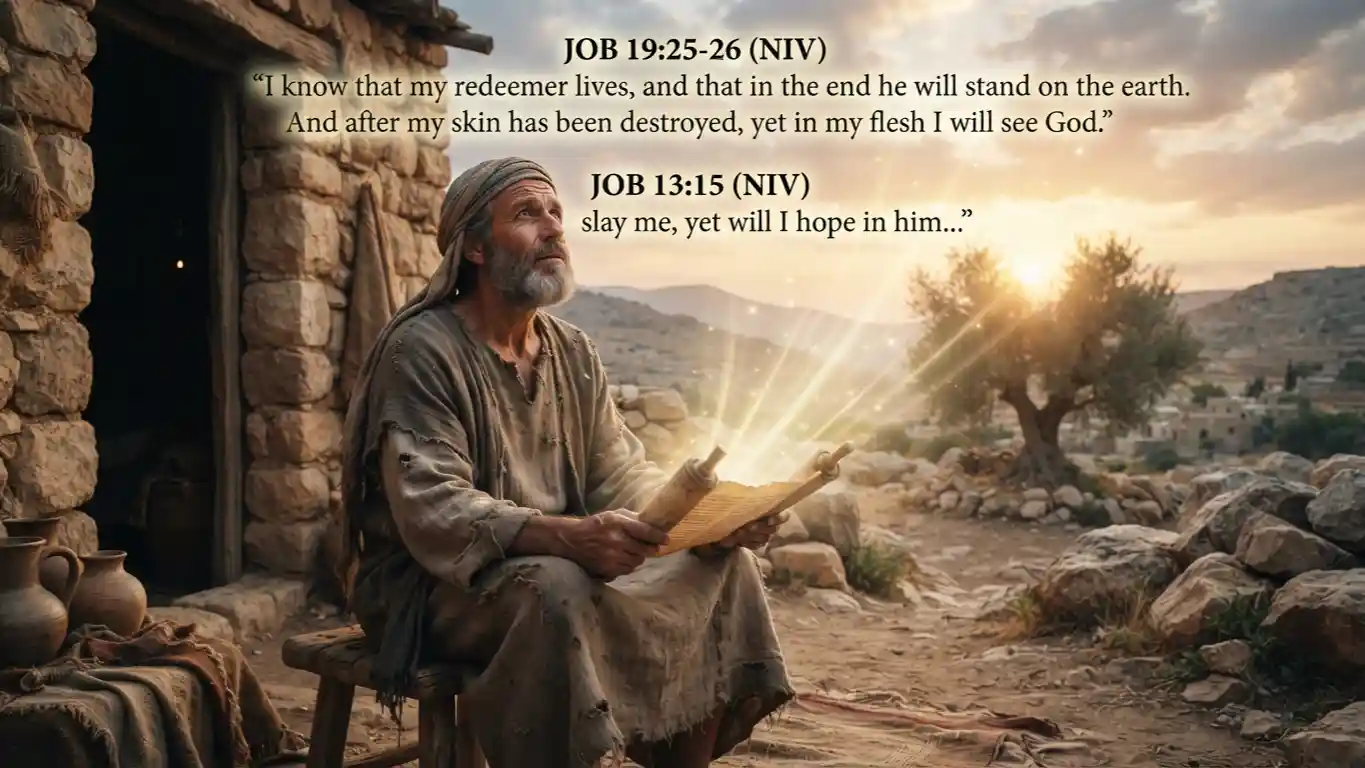
Even in the depths of overwhelming despair, these memorable passages look toward ultimate vindication, light, and future restoration.
- “Though he slayed me, yet will I trust in him.”
- “I know that my redeemer lives, and that in the end he will stand on the earth.”
- “If a man dies, will he live again? All the days of my hard service I will wait for my renewal to come.”
- “Yet the righteous will hold to their way, and those with clean hands will grow stronger.”
- “He will yet fill your mouth with laughter and your lips with shouts of joy.”
- “There is hope for a tree: If it is cut down, it will sprout again.”
- “He delivers the poor in their affliction and opens their ears in oppression.”
- “If you devote your heart to him and stretch out your hands to him… surely then you will lift up your face without shame.”
Inspirational Quotes From the Book of Job
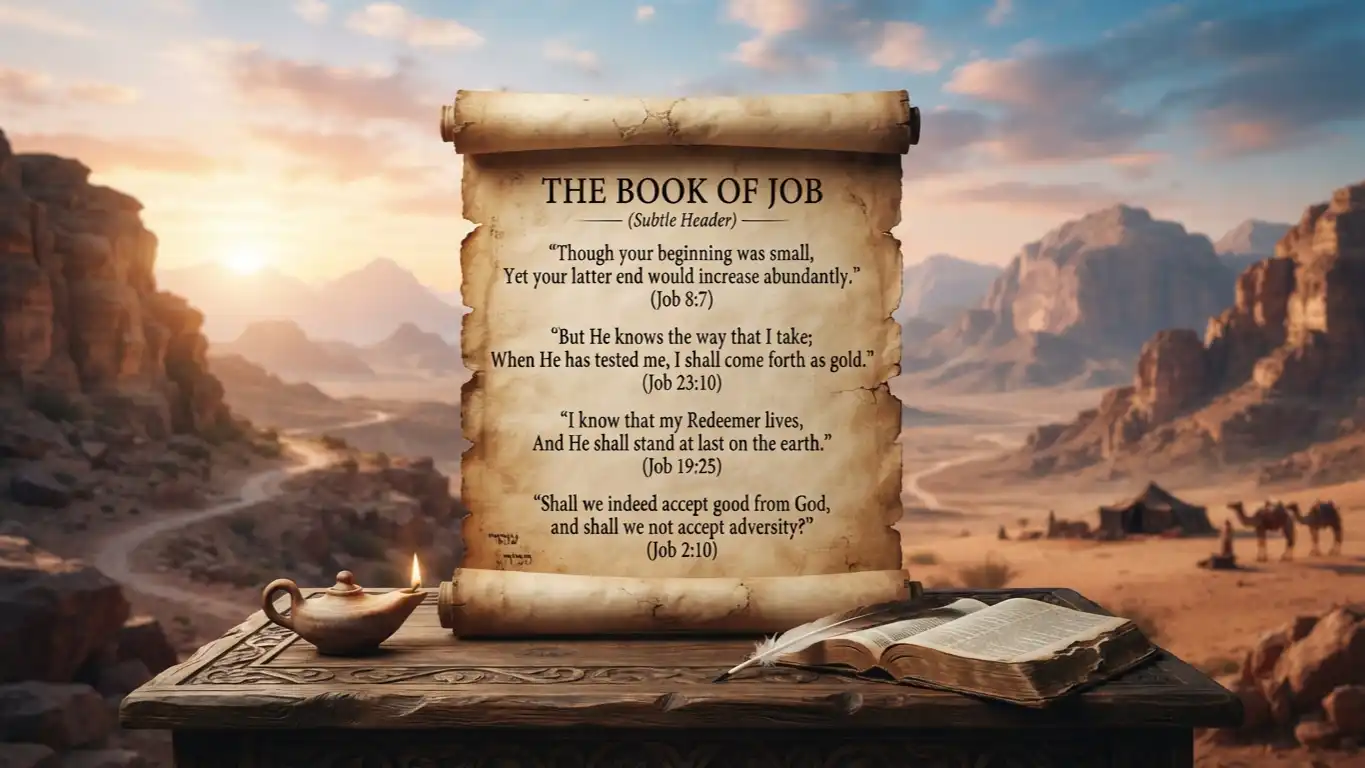
These uplifting lines encourage believers to persevere through testing, maintain moral integrity, and seek wisdom greater than human understanding.
- “He grants strength to the weary and increases the power of the weak.”
- “The fear of the Lord is wisdom, and to shun evil is understanding.”
- “Who has put wisdom in the mind, or given understanding to the heart?”
- “He wraps up the waters in his clouds, yet the clouds do not burst under their weight.”
- “With God are wisdom and strength; he has counsel and understanding.”
- “He performs wonders that cannot be fathomed, miracles that cannot be counted.”
- “To the snow he says, ‘Fall on the earth,’ and to the rain shower, ‘Be a mighty downpour.'”
- “God looks upon humanity; he sees everyone’s every step.”
Job 1:21
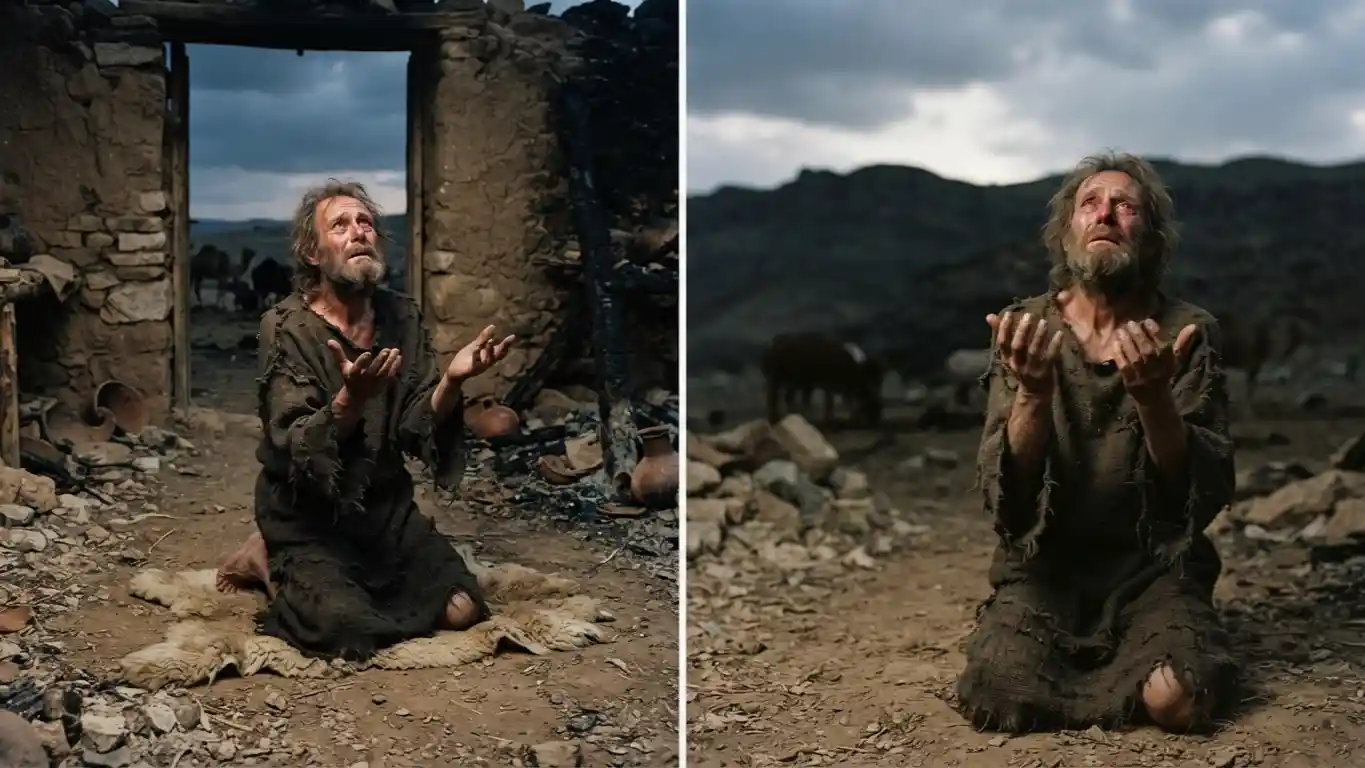
This famous verse marks Job’s immediate reaction to losing all his wealth and children, displaying staggering faith amidst absolute devastation.
- “And he said, ‘Naked I came from my mother’s womb, and naked shall I return.'”
- “‘The Lord gave, and the Lord has taken away; blessed be the name of the Lord.'”
- “In all this Job did not sin nor charge God with wrongdoing.”
- “The messenger had scarcely spoken when another arrived with news of sorrow.”
- “His heart remained steadfast even as his world collapsed instantly.”
- “He bowed his head to the earth in worship and humble submission.”
- “Not a word of bitter rebellion passed his lips during his darkest hour.”
- “He acknowledged the absolute sovereignty of the Creator over his life.”
Job Verses About Faith
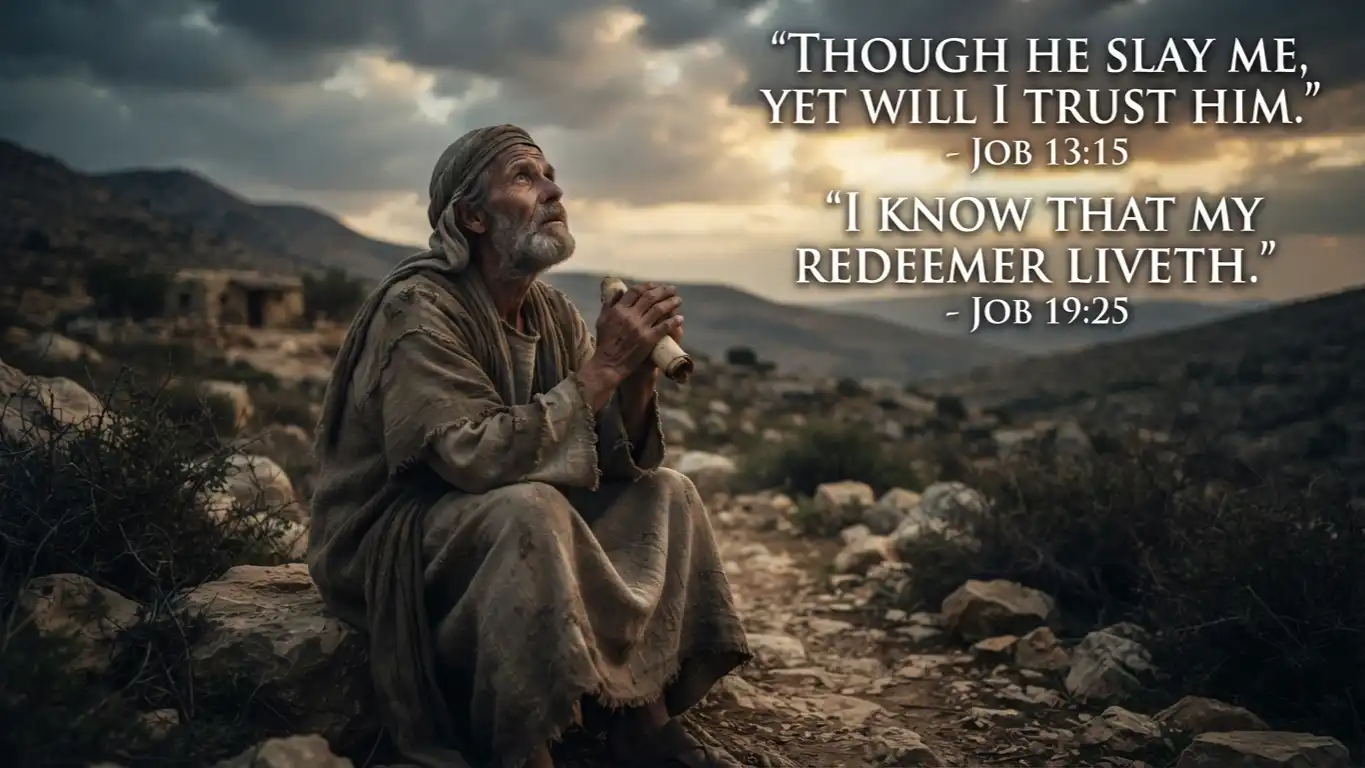
These passages highlight unyielding trust, spiritual endurance, and the belief that God sees and values human righteousness through every trial.
- “Even now my witness is in heaven; my advocate is on high.”
- “He knows the way that I take; when he has tested me, I shall come forth as gold.”
- “Though he test me with fire, my faith shall not burn away.”
- “I have treasured the words of his mouth more than my daily bread.”
- “My foot has held fast to his steps; I have kept his way and not turned aside.”
- “If I have walked with falsehood or my foot has hurried to deceit, let God weigh me on honest scales.”
- “He maintains my cause and delivers me from the grasp of the wicked.”
- “I will speak and not be silent, trusting in the justice of the Almighty.”
Verses About Job

These scriptural descriptions and external references highlight Job’s legendary character, blameless reputation, and steadfast endurance recognized throughout scripture.
- “In the land of Uz there lived a man whose name was Job.”
- “This man was blameless and upright; he feared God and shunned evil.”
- “Have you considered my servant Job? There is no one on earth like him.”
- “He is blameless and upright, a man who fears God and shuns evil.”
- “You have heard of Job’s perseverance and have seen what the Lord finally brought about.”
- “Though these three men Noah, Daniel, and Job were in it, they would deliver only themselves by their righteousness.”
- “He held fast to his integrity, even though you incited me against him.”
- “His wealth was immense, but his heart belonged entirely to the Creator.”
Job 23:10
This beloved verse symbolizes spiritual refinement, expressing confidence that testing purifies the soul like precious metal in a furnace.
- “But he knows the way that I take; when he has tested me, I shall come forth as gold.”
- “He searches every corner of my heart, finding truth hidden within.”
- “I look to the left and right, but I cannot perceive his invisible presence.”
- “Yet he knows every single step I have taken along this difficult path.”
- “My steps have held closely to his tracks; I have not turned aside from his command.”
- “The furnace of affliction burns hot, but the refiner watches closely over his metal.”
- “Pure gold emerges only after enduring intense heat and pressure.”
- “I will come out of this trial refined, shining, and proven true.”
Job Quotes on Suffering and Human Frailty
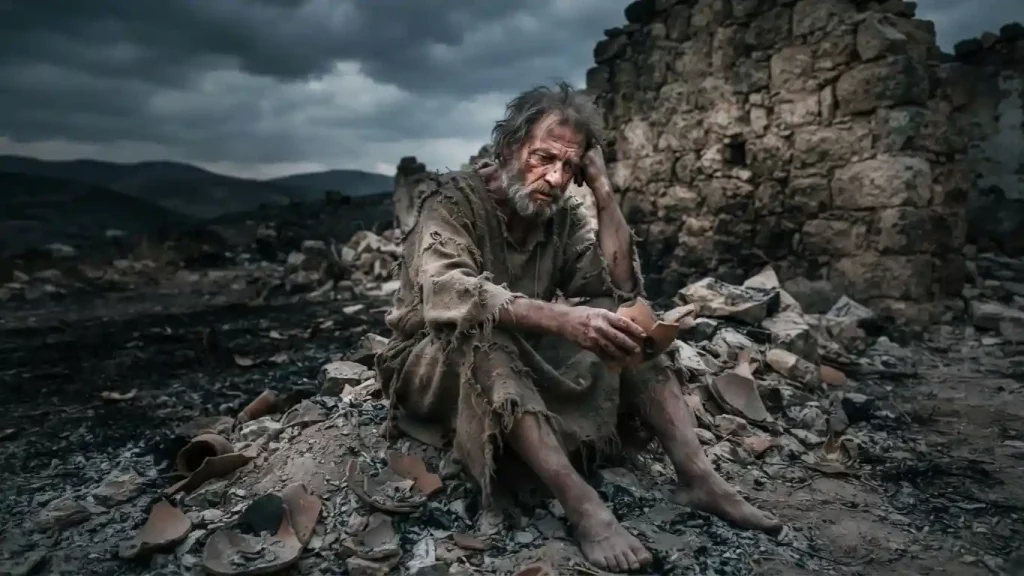
The opening chapters of Job establish the universal reality of human sorrow, reminding readers that trouble is part of our mortal existence. These verses validate the heavy emotional weight of grief.
- “Man is born to trouble, as the sparks fly upward.”
- “The Lord gave, and the Lord has taken away; blessed be the name of the Lord.”
- “Shall we accept good from God, and not trouble?”
- “Naked I came from my mother’s womb, and naked shall I return.”
- “My soul is weary of my life; I will give a free course to my complaint.”
Quick Question: What famous phrase does Job utter immediately after learning of his total ruin? Job famously declares, “The Lord gave, and the Lord has taken away; blessed be the name of the Lord,” showing remarkable initial submission.
Trusting God Through Pain and Loss

Even amid agonizing physical and emotional distress, Job expresses a steadfast, unshakeable trust in divine justice and ultimate redemption. These lines inspire faith when answers are completely absent.
- “Though he slay me, yet will I trust in him.”
- “He knows the way that I take; when he has tested me, I shall come forth as gold.”
- “I know that my redeemer lives, and that in the end he will stand on the earth.”
- “He grants strength to the weary and increases the power of the weak.”
- “Even now my witness is in heaven; my advocate is on high.”
Quick Question: What precious metal does Job use as a metaphor for surviving severe trials? Job compares the refinement of his character through suffering to coming forth as pure gold after testing.
Job’s Defense of Integrity and Innocence

Job firmly defends his righteous lifestyle against the harsh accusations of his well-meaning friends. His reflections remind readers to hold onto their integrity when others misunderstand them.
- “As God lives, who has denied me justice, my integrity I will not give up.”
- “Let God weigh me on honest scales, and he will know that I am blameless.”
- “Did not he who made me in the womb make them?”
- “I put on righteousness, and it clothed me; my justice was like a robe and a turban.”
- “My foot has held fast to his steps; I have kept his way and not turned aside.”
Quick Question: Why do Job’s friends incorrectly argue that he is currently suffering? His friends assume unconfessed sin or hidden wrongdoing must be the direct cause of his sudden calamities.
Elihu and the Reminder of Divine Greatness
Elihu steps in to shift the conversational focus, emphasizing that God is greater than man and uses suffering to instruct, discipline, and rescue souls from the pit.
- “God speaks once, yes twice, yet man perceives it not.”
- “He delivers the afflicted in their affliction and opens their ear in oppression.”
- “Behold, God is exalted in his power; who is a teacher like him?”
- “Do not despise the chastening of the Almighty.”
- “Look up to the heavens and see; gaze at the clouds high above you.”
Quick Question: How does Elihu’s age and speaking order compare to Job’s other three friends? Elihu is younger than the other comforters and speaks last before God answers directly out of the storm.
God Speaks From the Whirlwind

The Creator answers Job out of a storm, detailing the vast wonders of the natural world to humble human pride and highlight divine majesty beyond comprehension.
- “Where were you when I laid the foundations of the earth?”
- “Have you comprehended the vast expanses of the earth? Tell me, if you know all this.”
- “Can you bind the chains of the Pleiades or loosen the cords of Orion?”
- “Does the hawk soar by your wisdom and spread its wings toward the south?”
- “Will the one who contends with the Almighty correct him?”
Quick Question: From what specific meteorological phenomenon does God address Job and his friends? God speaks directly to Job out of a powerful whirlwind or storm.
Job’s Confession of Humility and Repentance
Humbled by the divine encounter, Job acknowledges his limited human perspective and responds with deep reverence, admitting he spoke about things too wonderful to understand.
- “I know that you can do all things; no purpose of yours can be thwarted.”
- “Surely I spoke of things I did not understand, things too wonderful for me to know.”
- “My ears had heard of you but now my eyes have seen you.”
- “Therefore I despise myself and repent in dust and ashes.”
- “I have uttered what I did not understand, things too wonderful for me.”
Quick Question: What physical substances does Job sit in while repenting and expressing remorse? Job sits humbly in dust and ashes to signify his complete grief and repentance.
Wisdom and Understanding Beyond Human Reach

Job chapter 28 explores the immense value of true wisdom, noting that while humans can mine precious metals from the earth, divine wisdom belongs to God alone.
- “Where can wisdom be found? Where does understanding dwell?”
- “Man does not comprehend its worth; it cannot be found in the land of the living.”
- “The fear of the Lord is wisdom, and to shun evil is understanding.”
- “God understands the way to it and he alone knows where it dwells.”
- “It cannot be bought with the finest gold, nor can its price be weighed in silver.”
Quick Question: According to this famous poetic chapter, what constitutes true human wisdom? The text concludes that the fear of the Lord is true wisdom and turning away from evil is understanding.
Restoration and Double Blessings at the End
The book concludes with Job’s fortunes fully restored, illustrating that perseverance through profound grief can lead to renewed community, family, and abundance.
- “The Lord restored his fortunes and gave him twice as much as he had before.”
- “And the Lord blessed the latter part of Job’s life more than the former part.”
- “After this, Job lived a hundred and forty years; he saw his children and their children to the fourth generation.”
- “His brothers and sisters came and ate bread with him in his house.”
- “And so Job died, an old man and full of years.”
Quick Question: By what multiplier does God restore Job’s material possessions at the end of the book? God restores all of Job’s livestock and wealth to exactly twice what he possessed before his trials.
Frequently Asked Questions
- What is the main theme of the Book of Job?
- It explores the mystery of innocent suffering, divine sovereignty, human endurance, and maintaining faith when life falls apart.
- Who wrote the Book of Job?
- The author is traditionally anonymous, though Jewish tradition attributes its compilation or authorship to Moses or various sages.
- Why did Satan test Job in the narrative?
- Satan challenged God, claiming Job only honored Him because of his wealth and protection, prompting a test of pure motives.
- Are books of job quotes useful for grief counseling?
- Yes, they offer raw honesty about deep pain, making them deeply comforting for those navigating profound personal loss.
- How does the story of Job end?
- Job’s health is restored, his family is renewed, and his wealth is doubled, symbolizing ultimate redemption and perseverance.
- Is Job considered a historical or poetic book?
- Scholars view it as ancient wisdom literature combining historical narrative framework with profound theological poetry.
What are the 7 lessons from the book of Job? - The seven core lessons teach that suffering is not always punishment for sin, honest questioning can be an act of faith, human wisdom has limits, presence matters more than explanations, dogmatic theology can victimize the afflicted, and resilient faith can endure deep doubt.
- What is a good quote for a job?
- “The Lord gave, and the Lord has taken away; blessed be the name of the Lord” (Job 1:21) is a powerful verse demonstrating total resilience and trust during immense loss.
- What does Job 7:14 say?
- “Then you frighten me with dreams and terrify me with visions,” expressing Job’s profound exhaustion and how physical suffering disrupted even his sleep.
- What are the 10 most famous quotes?
- Famous lines include “Fear the old blood,” “My magic is never giving up,” “The Lord gave, and the Lord has taken away,” and “Surpass your limits right here, right now.”
Topic Quiz
1. Who famously declared, “The Lord gave, and the Lord has taken away”?
(A) Elihu (B) Eliphaz (C) Job (D) Bildad
2. From what weather event does God answer Job in the later chapters?
(A) An earthquake (B) A whirlwind (C) A raging fire (D) A gentle whisper
3. What does Job compare his testing process to in Chapter 23?
(A) Silver coins (B) Refined gold (C) Precious stones (D) Fire-tested clay
4. According to Job 28, what is defined as true wisdom?
(A) Studying the stars (B) Accumulating wealth (C) The fear of the Lord (D) Listening to elders
5. How much wealth did the Lord give Job back at the end of his trials?
(A) The exact same amount (B) Twice as much as before (C) Ten times his original wealth (D) Whatever his friends donated
Answer Key:
- (C)
- (B)
- (B)
- (C)
- (B)
Conclusion
Book of job quotes offer timeless encouragement for anyone navigating seasons of hardship, grief, and unanswered questions. They remind us that it is okay to express raw pain while holding onto ultimate trust in a higher purpose.
Reflecting on these powerful verses provides comfort, inner strength, and the reassurance that dawn follows even the darkest nights. Keep moving forward with resilience and hope.
Explore your favorite passages today and discover the comforting wisdom hidden within this ancient story of endurance.

Mustansar Abbas is a writer and author of the article “LuxaryEditorial” He is passionate about creating meaningful and engaging content that connects with readers through clear ideas and thoughtful expression.