

The most powerful quotes from A Long Walk to Water by Linda Sue Park remind us that hope can survive even the hardest journeys. Through the stories of Salva Dut and Nya, the novel explores perseverance, family, friendship, courage, and the importance of clean water.
Published in 2010, the novel follows two young people in Sudan whose lives unfold in different periods. Salva’s story is based on the real experiences of a Sudanese refugee who became a humanitarian leader. Nya is a fictional character whose daily struggle to collect water represents the challenges faced by children in communities without reliable access to clean water.
What makes this book meaningful is its honest portrayal of hardship. Salva faces separation, danger, and grief, while Nya spends much of her day walking to collect water for her family. Their experiences show that courage does not mean feeling fearless. Sometimes it means taking another step when the future is uncertain.
In this guide, you will find memorable short quotations, explanations of their meaning, and the important lessons they offer students, teachers, and general readers. Each section connects the novel’s words with its central themes, helping you understand not only what the characters experience but also why their journeys matter.
1. Quotes About Perseverance: One Step at a Time

Perseverance is one of the central themes of A Long Walk to Water. Salva learns that an enormous challenge becomes easier to face when he concentrates on the next manageable task instead of worrying about the entire journey.
“You need only to walk as far as those bushes.”
Uncle Jewiir, speaking to Salva
Uncle Jewiir gives Salva practical advice when the boy struggles to continue through the desert. Instead of asking him to imagine walking hundreds of miles, he points toward a nearby goal.
This moment introduces a lesson that stays with Salva throughout his life: progress does not always require knowing how everything will end. Sometimes, it begins with completing the next small task.
Lesson: When a challenge feels too large, identify one action you can take today.
A step at a time
Salva later remembers his uncle’s advice when he faces new difficulties. The lesson becomes a way to manage problems that seem impossible to solve all at once.
This idea is powerful because it turns perseverance into something practical. A student can complete one assignment, a person facing a difficult change can make one decision, and a community can begin solving a larger problem through a series of smaller efforts.
Lesson: You do not need to solve every problem today. Focus on the one directly in front of you.
Moving forward one day at a time
As Salva grows into a leader, he applies this lesson to the boys traveling with him. His leadership shows that encouragement is most useful when it gives people a realistic way to continue.
The message is not that determination makes every problem disappear. Salva’s journey remains dangerous and painful. Instead, the novel shows how a clear next step can help someone keep moving despite uncertainty.
Lesson: Consistent effort can carry you farther than trying to solve everything at once.
2. Quotes About Hope and Survival
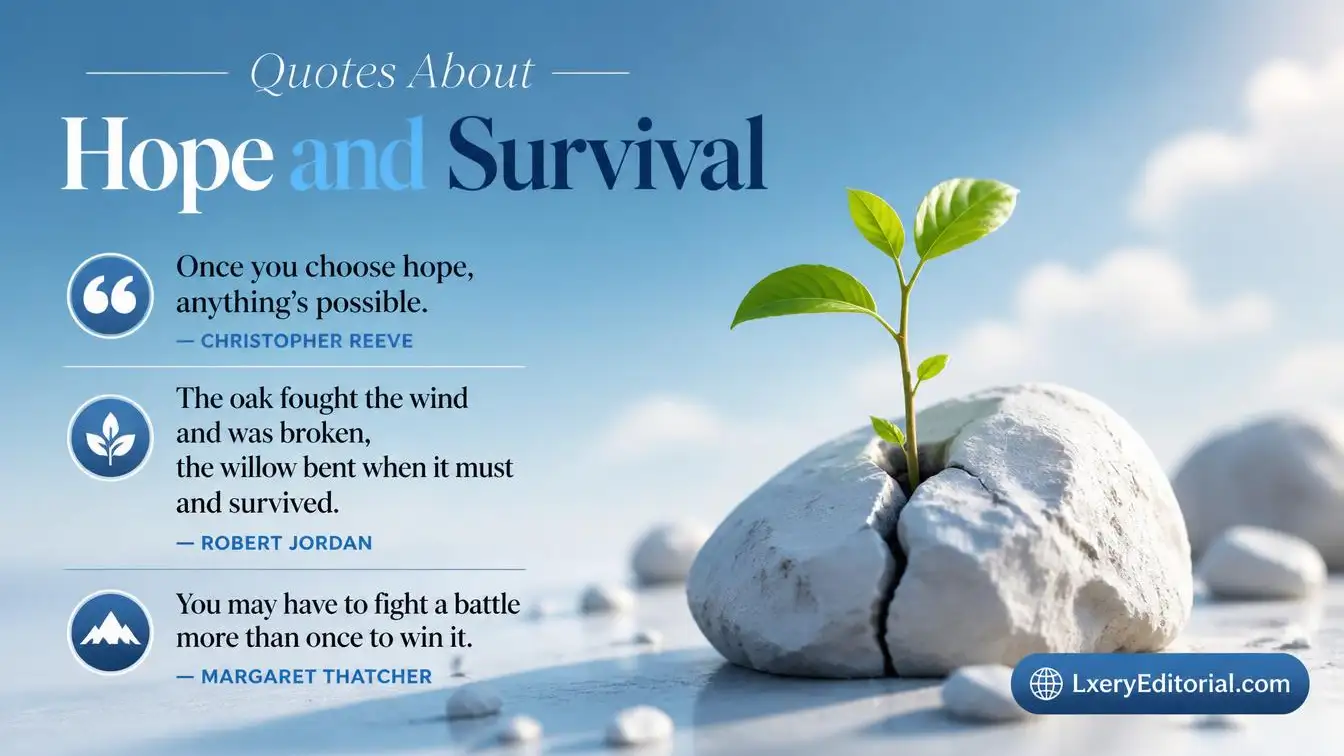
Hope in the novel is not simple optimism. Salva has good reasons to feel afraid, and he cannot know whether he will find his family again. His story shows how hope can exist alongside grief and uncertainty.
“How can I go on without them?”
Salva, reflecting on his family
Salva’s separation from his family creates one of the deepest emotional struggles in the novel. He is still a child, yet he must make decisions that affect his survival.
His questions reveal the emotional cost of displacement. He does not know what has happened to his loved ones, and he must continue without the reassurance that they are safe.
The passage also shows that survival is about more than physical strength. Salva needs a reason to keep living and a way to imagine a future beyond his immediate suffering.
Lesson: Hope does not require certainty. Sometimes it means continuing while important questions remain unanswered.
“But how can I not go on?”
Salva, considering his future
Salva’s reflection captures the tension between despair and determination. He recognizes how painful his situation has become, but he also considers what his family would want for him.
His decision to continue is not presented as an easy victory over sadness. Instead, he finds a reason to take the next step even when he cannot change what has happened.
Lesson: Courage can mean continuing through grief rather than pretending grief does not exist.
Salva’s abandonment in the wilderness
One of Salva’s most painful experiences occurs when he realizes that others have left him behind because they fear he will slow them down.
This moment exposes the vulnerability of being a child in a dangerous world. Salva is not protected simply because he is young, and survival depends partly on whether other people are willing to help him.
The episode also makes his later determination more meaningful. He has experienced rejection and loss, yet he continues to search for safety and a future.
Lesson: A person’s difficult circumstances do not determine everything they can become.
3. Quotes About Family and Friendship

Family and friendship provide emotional support throughout Salva’s journey. Although war separates Salva from the people he loves, he also discovers that kindness from others can help him survive.
“We are together now, so I will look after you!”
Uncle Jewiir, reassuring Salva
When Salva finds his uncle, he gains a source of protection and guidance. Uncle Jewiir helps him understand how to manage the immediate dangers around him.
His promise matters because Salva is frightened and alone. The reassurance gives him something he urgently needs: the knowledge that someone is looking out for him.
Uncle Jewiir also teaches through practical actions. He does not simply tell Salva to be brave; he shows him how to continue when the journey becomes painful.
Lesson: Support can make a frightening situation feel more manageable, especially when it comes with practical help.
“Me, too.”
Marial, responding to Salva
Salva and Marial discover that they have both been separated from their families. Their shared experience creates an immediate connection between them.
The friendship reminds readers that people do not always need perfect words to comfort one another. Sometimes, knowing that another person understands your experience can reduce the feeling of being alone.
Their relationship also makes the novel’s later losses more painful. Friendship offers comfort, but it does not guarantee that danger will disappear.
Lesson: A small act of understanding can matter deeply to someone facing hardship.
Choosing to help a stranger
At one point, a group debates whether to take Salva with them. A man decides that they will bring him along.
This scene shows how a decision made by one person can change someone else’s future. Salva’s survival depends not only on his determination but also on the kindness and judgment of people he encounters.
The moment is also an important reminder that perseverance is not always an individual achievement. People often survive because others make room for them, protect them, or share what they have.
Lesson: Helping someone vulnerable can make a life-changing difference.
4. Quotes About Nya’s Daily Walk for Water
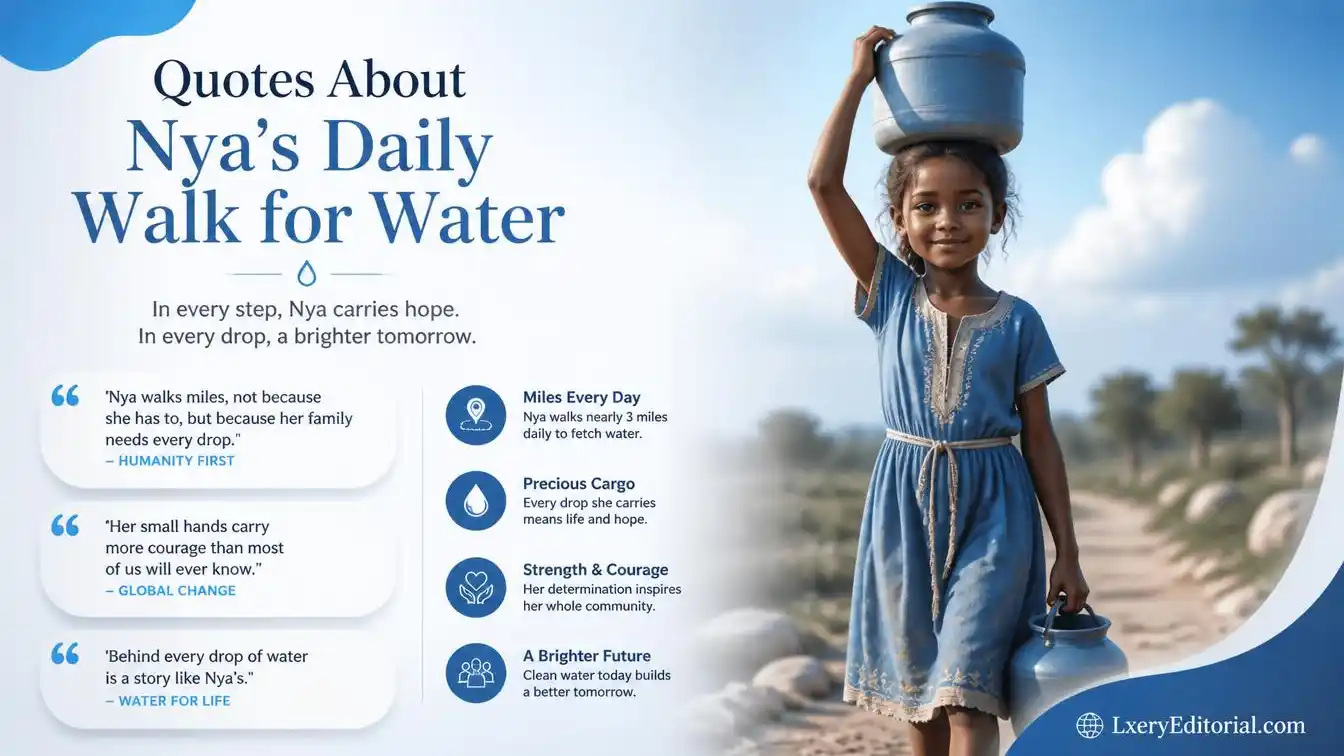
Nya’s story offers a different perspective on endurance. Salva travels because war has forced him from home, while Nya repeatedly walks to collect water for her family.
“Nearly a full day of walking altogether.”
Narration describing Nya’s routine
Nya makes two daily trips to the pond, and the combined journey takes up much of her day. Collecting water is not a quick household task; it shapes her schedule and limits the time she has for other activities.
Through Nya, Park draws attention to a challenge that readers with easy access to clean water may rarely consider. Something as ordinary as getting a drink can require hours of physical effort when water is far from home.
Lesson: Everyday necessities can become major barriers when essential resources are difficult to reach.
Water that is not safe to drink
Nya’s family sometimes tries to collect water from holes in a dried lakebed. The water is scarce, and it can be unsafe.
This part of the novel shows that finding water and having safe drinking water are not the same thing. Contaminated water can create serious health risks, particularly for children.
Nya’s younger sister, Akeer, becomes ill, bringing the consequences of unsafe water into the family’s daily life.
Lesson: Clean water is essential to health, education, and a family’s well-being.
Water as a symbol of life
Water represents more than a physical resource throughout the novel. It is connected to health, opportunity, dignity, and the possibility of a better future.
For Nya, a nearby well can mean less time walking and more time for school. For Salva, helping bring water to communities becomes a way to turn his own painful experiences into meaningful action.
Lesson: Access to basic resources can create opportunities that extend far beyond the resource itself.
5. Quotes About Courage and Leadership

Salva’s journey changes him from a frightened child into someone capable of guiding others. His courage develops through experience, loss, and the decisions he makes when people depend on him.
Leading other boys toward safety
As Salva travels with other displaced children, he gradually becomes a leader. His experience teaches him to focus on practical goals and to keep the group moving through uncertainty.
His leadership is not based on having every answer. Instead, he learns to make decisions, draw on lessons from his uncle, and keep moving when the journey becomes difficult.
This is an important distinction: courage does not mean never feeling afraid. It means making responsible choices even when fear is present.
Lesson: Leadership often begins with taking responsibility for the next necessary step.
Turning hardship into purpose
Salva’s later work to bring clean water to communities in South Sudan connects his personal history with a larger humanitarian goal. The real Salva Dut founded Water for South Sudan after learning that his father had survived but was suffering from a waterborne illness.
His work shows how a painful experience can inspire someone to help others. It does not mean that suffering is necessary or that every hardship has an easy purpose. Rather, Salva chooses to use what he has experienced to make a difference.
Lesson: Personal determination can become more powerful when it is directed toward helping others.
6. Quotes About New Beginnings

New beginnings in A Long Walk to Water are not simple endings in which every problem disappears. They represent opportunities to rebuild, reconnect, and move toward a safer future.
Salva’s first step into a new life
After years of displacement, Salva eventually reaches the United States. This transition gives him new opportunities, but it also means adjusting to an unfamiliar country and a different way of life.
The journey reminds readers that reaching safety is an important milestone, not the end of every challenge. Starting again can require patience, learning, and the willingness to accept help.
Lesson: A new beginning may feel uncertain, but it can open doors that once seemed impossible.
Nya’s village receives a well
When a well is drilled in Nya’s village, the change affects much more than the distance she must walk. The community can begin imagining a future in which children have more time for school and families have better access to water.
The well also brings Salva and Nya’s separate storylines together. Salva’s determination to help others has a direct connection to Nya’s daily life.
This ending gives the novel its central message of hope: meaningful change can grow from one person’s decision to help a community.
Lesson: A practical solution to a basic need can create opportunities for an entire community.
Salva’s reunion with his father
Salva’s reunion with his father brings an emotional resolution to one of the novel’s longest-running uncertainties. After years of separation, Salva discovers that his father is alive.
The reunion highlights the importance of family and the emotional weight of surviving without knowing whether loved ones are safe. It also gives Salva a deeper understanding of how his past has shaped his future.
Lesson: Connection and belonging can remain powerful sources of hope, even after years of uncertainty.
7. The Most Important Lessons from A Long Walk to Water
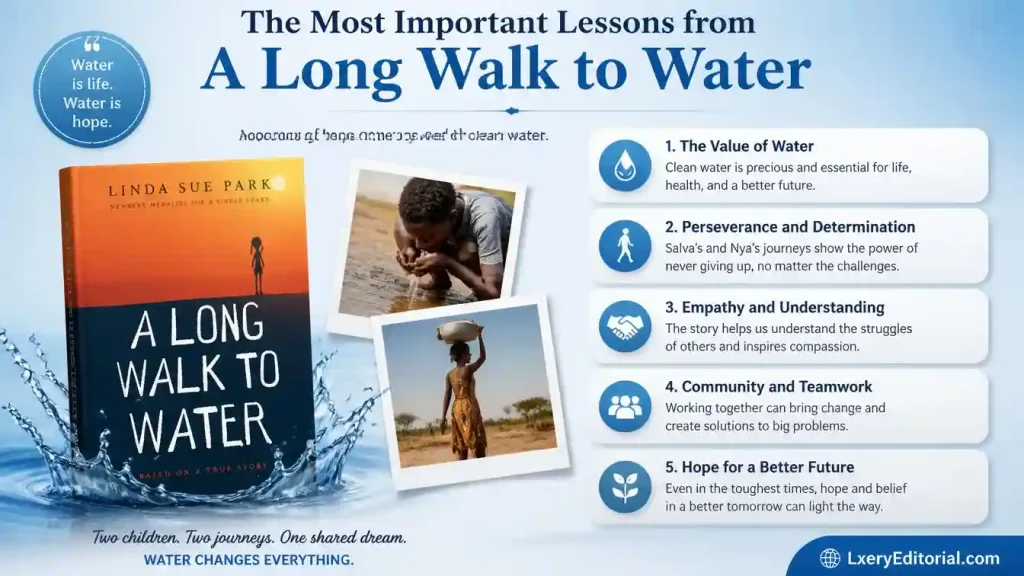
The novel offers several lessons that readers can apply beyond the story.
Break large problems into smaller steps
Salva’s uncle teaches him to focus on a nearby goal rather than the entire journey. This is a useful way to approach schoolwork, personal challenges, and difficult decisions.
Recognize the importance of community
Salva receives help from people he meets, and Nya’s future improves through a community water project. Their stories show that meaningful change often requires cooperation.
Understand that hope and sadness can exist together
The characters experience fear, loss, and uncertainty. Their perseverance does not erase those feelings; it helps them continue despite them.
Value access to clean water
Nya’s daily routine illustrates how water access affects health, education, and family life. The novel encourages readers to think about essential resources that others may struggle to obtain.
Turn concern into practical action
Salva’s work demonstrates that helping others can begin with recognizing a real need and taking steps to address it. Compassion becomes especially meaningful when it leads to practical support.
8. How to Use These Quotes in a School Essay

If you are studying A Long Walk to Water, a quotation is most useful when you explain how it supports your argument. Avoid adding a quote simply because it sounds inspiring.
Use this simple structure:
- Make a point: State what the passage reveals about a character or theme.
- Introduce the quotation: Give enough context for readers to understand the moment.
- Use a short excerpt: Copy the wording and punctuation from your edition of the book.
- Explain the meaning: Discuss the character’s feelings, decision, or change.
- Connect to the theme: Show how the passage supports your main argument.
Example analysis:
Uncle Jewiir’s advice about walking only as far as the bushes teaches Salva to divide a difficult journey into smaller goals. Rather than focusing on the miles ahead, Salva concentrates on the next manageable step. This moment introduces the perseverance that later helps him face new challenges and work toward helping others.
For a formal essay, include the page number required by your teacher and use the citation style assigned to you. Page numbers can differ between editions, so check your own copy.
Frequently Asked Questions
What is the most famous quote from A Long Walk to Water?
One of the novel’s best-known passages is Uncle Jewiir’s advice that Salva should walk only as far as the nearby bushes. The lesson becomes a lasting reminder to focus on one manageable step at a time. Check the exact wording in your edition before quoting it.
Are Salva and Nya real people?
Salva Dut is a real person whose experiences inspired one of the novel’s storylines. Nya is a fictional character created by Linda Sue Park to represent the challenges faced by children who must walk long distances to collect water. The novel combines Salva’s story with Nya’s fictional narrative.
What is the main message of A Long Walk to Water?
The novel explores perseverance, hope, community, and access to clean water. Salva’s story shows the importance of continuing through hardship, while Nya’s story highlights how reliable water access can improve health and create opportunities for education.
Why is the book called A Long Walk to Water?
The title refers to the journeys at the heart of the story. Salva travels long distances while seeking safety, and Nya repeatedly walks to collect water for her family. Water connects the two storylines and represents survival, opportunity, and hope.
What does “one step at a time” mean in the novel?
It means focusing on the next manageable action instead of becoming overwhelmed by the whole challenge. Uncle Jewiir’s advice helps Salva survive a difficult journey and later influences how he approaches new problems.
What does water symbolize in A Long Walk to Water?
Water symbolizes life, health, dignity, and opportunity. Nya’s daily struggle shows the burden of living without convenient access to safe water, while the well at the end of the novel represents the possibility of lasting community change.
How does Salva show perseverance?
Salva continues through displacement, danger, and grief. He learns to break large challenges into smaller steps, adapts to new circumstances, and eventually works to improve access to clean water for others.
How do Salva and Nya’s stories connect?
Their stories take place in different periods, but both are shaped by water and survival. Their paths intersect when Salva’s water project brings a well to Nya’s village, connecting his humanitarian work with her daily life.
Conclusion
The most meaningful quotes from A Long Walk to Water reveal that hope is often built through small actions, supportive relationships, and the determination to keep going. Salva’s journey shows how perseverance can carry someone through uncertainty, while Nya’s experience reminds readers that access to clean water can change a child’s future.
The novel’s message is not that every problem can be solved through determination alone. It also shows the importance of community, practical support, and resources that help people live safely and with dignity.
If one lesson stays with you after reading the book, let it be this: focus on the next step, recognize when others need help, and look for practical ways to make a difference. Salva’s story continues beyond the final chapter through the real-world work of Water for South Sudan, an organization dedicated to improving access to clean water.

Mustansar Abbas is a writer and author of the article “LuxaryEditorial” He is passionate about creating meaningful and engaging content that connects with readers through clear ideas and thoughtful expression.